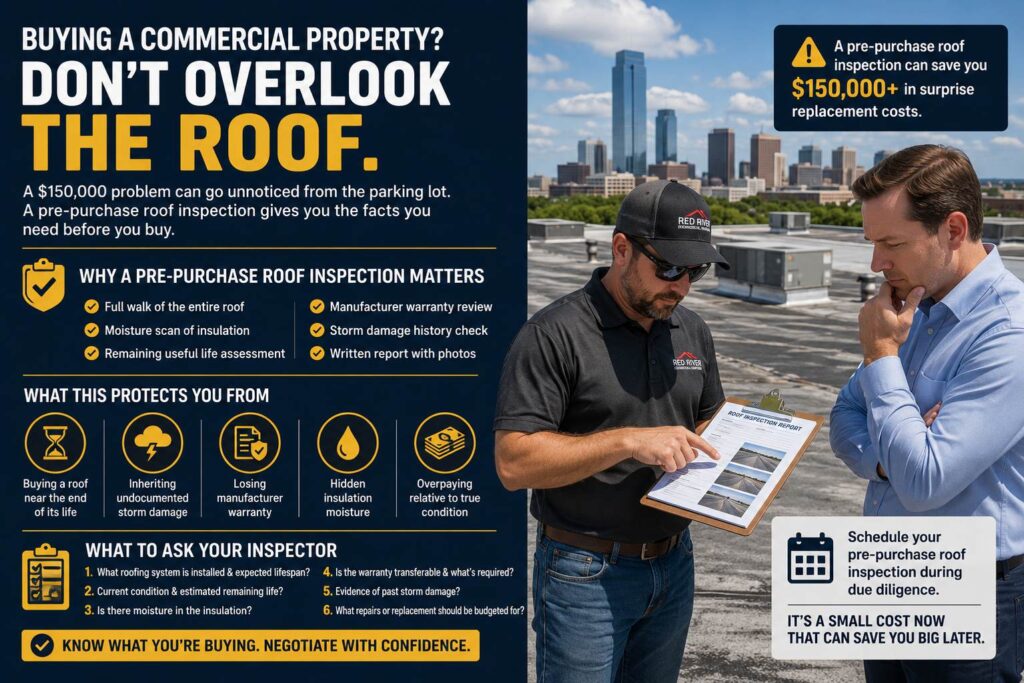
Yes, and if your due diligence checklist doesn’t already have this on it, it should be near the top. A commercial roof is one of the most expensive components of a building to replace, and it’s also one of the easiest things for a buyer to overlook during a purchase. Everyone remembers to check the HVAC system, the electrical, the plumbing. The roof gets a walk-by glance from the parking lot, if that, and that’s exactly how buyers in this market end up owning a $150,000 replacement problem within their first year.
I’ve inspected roofs for buyers who were days away from closing on a property, and in more than a few cases, what we found changed the deal entirely, either the price, the terms, or in some cases whether the buyer walked away.
Why a Pre-Purchase Roof Inspection Is Different from a Standard Inspection
A general building inspection typically includes a roof check, but it’s usually a limited visual scan, sometimes from the ground or a ladder, not a full walk of the roof surface with the right tools. That’s fine for catching obvious problems, but it misses the things that actually determine a roof’s remaining value.
A proper pre-purchase commercial roof inspection includes:
- A full walk of the entire roof surface, not a partial view or a drone photo review
- Moisture scanning of the insulation, which tells you whether the roof has hidden saturation that a visual check alone would never catch
- An assessment of remaining useful life based on the roofing system’s age, condition, and manufacturer specifications
- A review of manufacturer warranty status, including whether the warranty is still valid, transferable to a new owner, and what maintenance history exists to support it
- Documentation of storm damage history, which matters enormously here given how often Oklahoma roofs take hail and wind hits
- A written report with photos you can actually use in negotiations, not just a verbal “looks fine”
That level of detail is the difference between knowing what you’re buying and hoping you’re buying something solid.
What This Actually Protects You From
1. Buying a roof that’s already near the end of its life. Most commercial roofing systems run somewhere between 15 and 30 years depending on the material, and Oklahoma weather tends to shorten that timeline. If a seller’s roof is at year 17 of a 20-year expected lifespan, that’s a cost you should know about and negotiate around before closing, not discover the following spring when it starts leaking.
2. Inheriting undocumented storm damage. We sit in Hail Alley, and it’s common for a roof to have taken hits from storms over the years that were never reported to insurance or repaired properly. A buyer who doesn’t know this walks into ownership with damage that’s already compounding, and no claim history to fall back on since the filing window has likely closed by the time you’d discover it.
3. Losing manufacturer warranty coverage without knowing it. Many commercial roofing warranties either don’t transfer automatically to a new owner or require specific steps to transfer properly. Some warranties are also voided by unauthorized repairs performed by a previous owner, something you’d have no way of knowing without an inspection that specifically checks for it. Finding this out after closing means you own the liability with none of the protection.
4. Getting blindsided by a hidden insulation problem. This is the one visual inspections miss most often. A roof can look fine from the surface while the insulation underneath is significantly saturated. That’s a structural and financial issue that doesn’t show up until it’s already expensive, unless someone runs a proper moisture scan before you own the problem.
5. Overpaying relative to the building’s true condition. A roof inspection report gives you real leverage. If the findings show a roof with a handful of years left, that’s a legitimate basis to negotiate the purchase price, ask the seller to address it before closing, or factor a replacement into your budget from day one instead of being surprised by it later.
When to Schedule It
Ideally, a roof inspection should happen during your due diligence period, alongside your other property inspections, and before your contingencies expire. This gives you time to actually use the findings, whether that means renegotiating terms, requesting seller repairs, or simply going into the purchase with accurate numbers.
If you’re buying in the OKC metro specifically, it’s also worth asking directly about the roof’s storm damage history and whether it’s been inspected or repaired following any major hail events in recent years. Sellers aren’t always forthcoming with this unprompted, and a qualified roofing contractor can often spot evidence of past hail impact even if it was never formally addressed.
What to Ask Your Inspector to Provide
When you schedule a pre-purchase inspection, make sure you’re getting a report that actually answers the questions that matter for a purchase decision:
- What roofing system is installed, and what’s its typical expected lifespan?
- What’s the current condition, and what’s the estimated remaining useful life?
- Is there moisture in the insulation, and if so, how extensive is it?
- Is there a manufacturer warranty in place, is it transferable, and what’s required to transfer it?
- Is there evidence of past storm damage, repaired or unrepaired?
- What repairs or replacement should be budgeted for, and on what rough timeline?
That last answer is often the most valuable thing you walk away with. It turns “the roof looks okay” into an actual number you can plan around.
The Bottom Line
A commercial roof is too expensive a component to buy blind. A pre-purchase inspection costs a small fraction of what a surprise replacement will, and it gives you real information, remaining lifespan, warranty status, moisture condition, and storm history, that you can actually use at the negotiating table. If you’re under contract on a commercial property in Edmond or the OKC metro and a proper roof inspection isn’t already scheduled, get it on the calendar before your due diligence period closes. It’s a lot cheaper to find out what you’re buying now than to find out the hard way after the deed is signed.